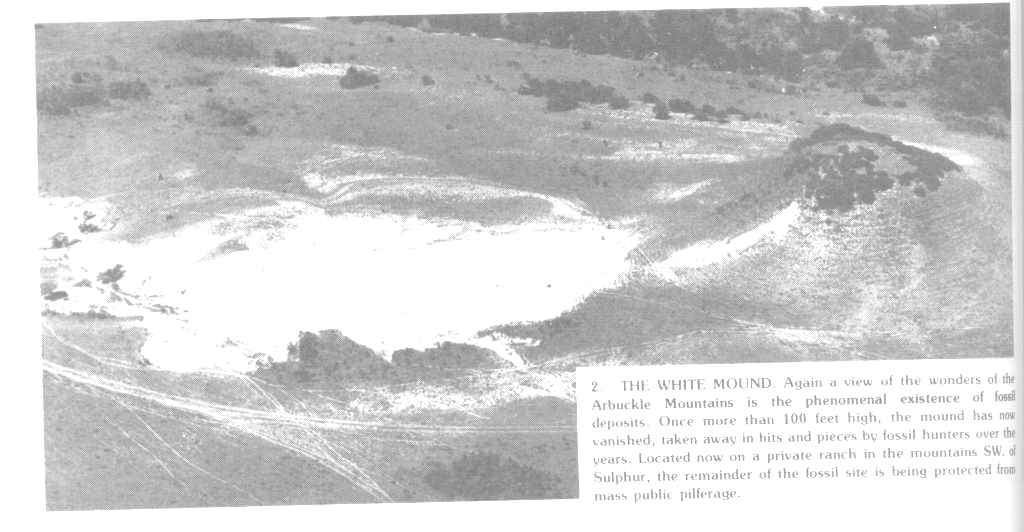
White Mound was a
geological site made up entirely of fossils. The mound was located east of
Big Canyon and at one time measured more than 100 feet high. Locals,
tourist and educational institutions carried off the fossils, one hand-full at a
time, until little remained of the mound. Today it is under the protection
of the landowner. 34° 2220N, 097° 0027W, Gene
Autry
“2. THE WHITE MOUND
Again a view of the wonders of the
Arbuckle Mountains is the phenomenal existence of fossil deposits. Once more
than 100 feet high, the mound has now vanished, taken away in bits and pieces by
fossil hunters over the years. Located now on a private ranch in the mountains
SW. of Sulphur, the remainder of the fossil site is being protected from mass
public pilferage.”
Photo submitted by Bill Thomas
Among the many geological curiosities of the Arbuckle Mountains once stood a striking formation known as The White Mound. Rising more than one hundred feet above the surrounding landscape, the mound was celebrated for its unusually rich fossil deposits—remnants of ancient marine life preserved within the region’s limestone layers. For decades, it drew the attention of amateur collectors, professional paleontologists, and curious travelers alike.
The very abundance that made the mound remarkable also contributed to its disappearance. Piece by piece, fossil hunters carried away fragments of the formation, gradually reducing what had been a towering natural landmark to a fraction of its original size. By the time preservation concerns gained traction, The White Mound had largely vanished.
Today, the site lies within a private ranch southwest of Sulphur. The remaining deposits, though far diminished, are now protected from further disturbance. While the mound itself no longer dominates the skyline, its legacy endures in the countless specimens removed over the years and in the stories of those who once explored its slopes.
The White Mound stands as a reminder of both the scientific value of Oklahoma’s geological heritage and the importance of safeguarding such resources for future generations.
Submitted by Dennis Muncrief - April 2008.