MORRIS FAMILY HISTORY
Page 1 transcript:
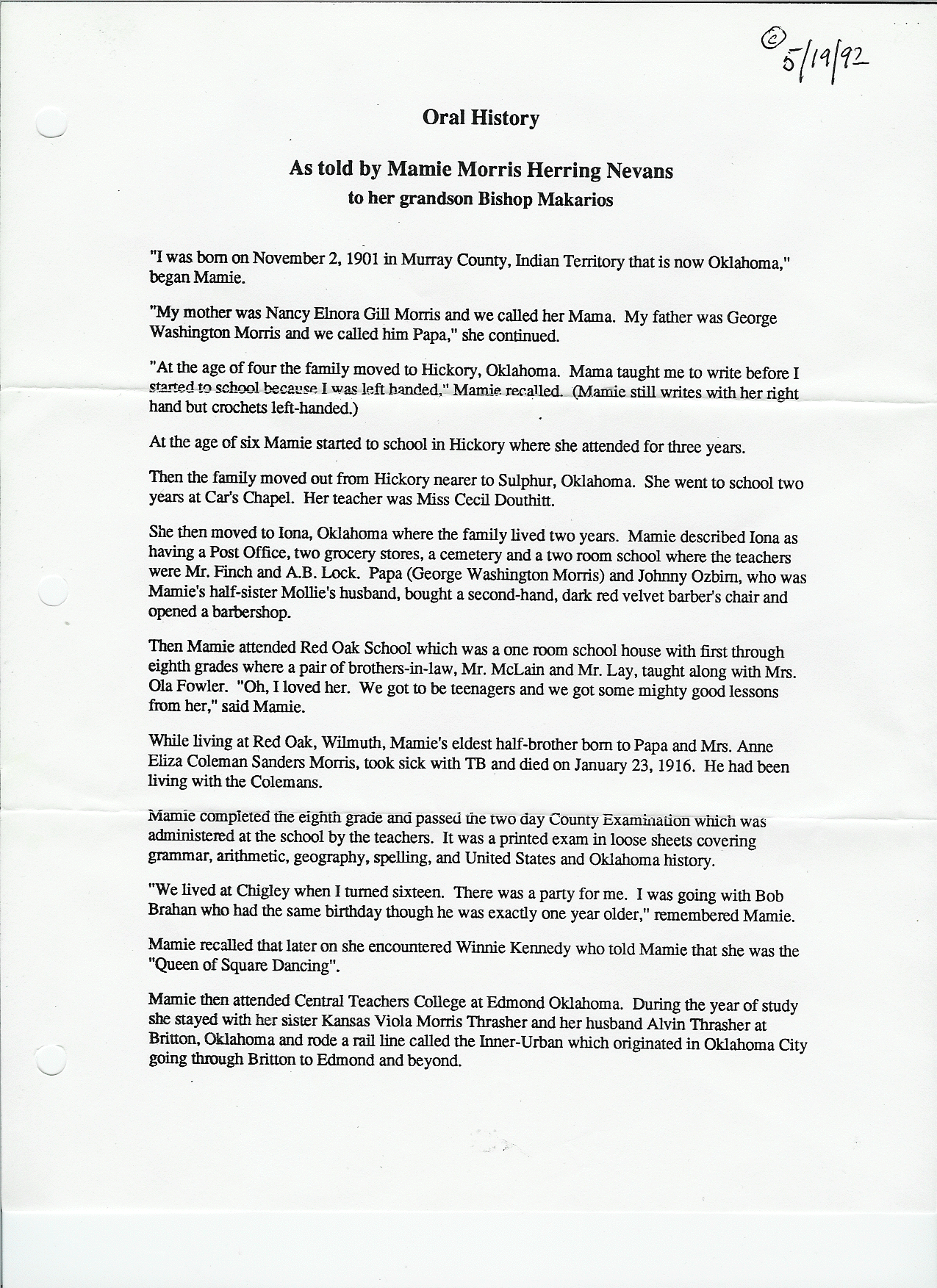
Oral History
As told by Mamie Morris Herring Nevans
to her grandson Bishop Makarios
"I was born on November 2, 1901 in Murray County, Indian Territory that is now Oklahoma," began Mamie.
"My mother was Nancy Elnora Gill Morris and we called her Mama. My father was George Washington Morris and we called him Papa," she continued.
"At the age of four the family moved to Hickory, Oklahoma. Mama taught me to write before I started to school because I was left handed," Mamie recalled. (Mamie still writes with her right hand but crochets left-handed.)
At the age of six Mamie started to school in Hickory where she attended for three years.
Then the family moved out from Hickory nearer to Sulphur, Oklahoma. She went to school two years at Car's Chapel. Her teacher was Miss Cecil Douthitt.
She then moved to Iona, Oklahoma where the family lived two years. Mamie described Iona as having a Post Office, two grocery stores, a cemetery and a two room school where the teachers were Mr. Finch and A.B. Lock. Papa (George Washington Morris) and Johnny Ozbim, who was Mamie's half-sister Mollie's husband, bought a second-hand, dark red velvet barber's chair and opened a barbershop.
Then Mamie attended Red Oak School which was a one room school house with first through eighth grades where a pair of brothers-in-law, Mr. McLain and Mr. Lay, taught along with Mrs. Ola Fowler. "Oh, I loved her. We got to be teenagers and we got some mighty good lessons from her," said Mamie.
While living at Red Oak, Wilmuth, Mamie's eldest half-brother born to Papa and Mrs. Anne Eliza Coleman Sanders Morris, took sick with TB and died on January 23, 1916. He had been living with the Colemans.
Mamie completed the eighth grade and passed the two day County Examination which was administered at the school by the teachers. It was a printed exam in loose sheets covering grammar, arithmetic, geography, spelling, and United States and Oklahoma history.
"We lived at Chigley when I turned sixteen. There was a party for me. I was going with Bob Brahan who had the same birthday though he was exactly one year older," remembered Mamie.
Mamie recalled that later on she encountered Winnie Kennedy who told Mamie that she was the "Queen of Square Dancing".
Mamie then attended Central Teachers College at Edmond Oklahoma. During the year of study she stayed with her sister Kansas Viola Morris Thrasher and her husband Alvin Thrasher at Britton, Oklahoma and rode a rail line called the Inner-Urban which originated in Oklahoma City going through Britton to Edmond and beyond.
Page 2 transcript:
Extracted Text
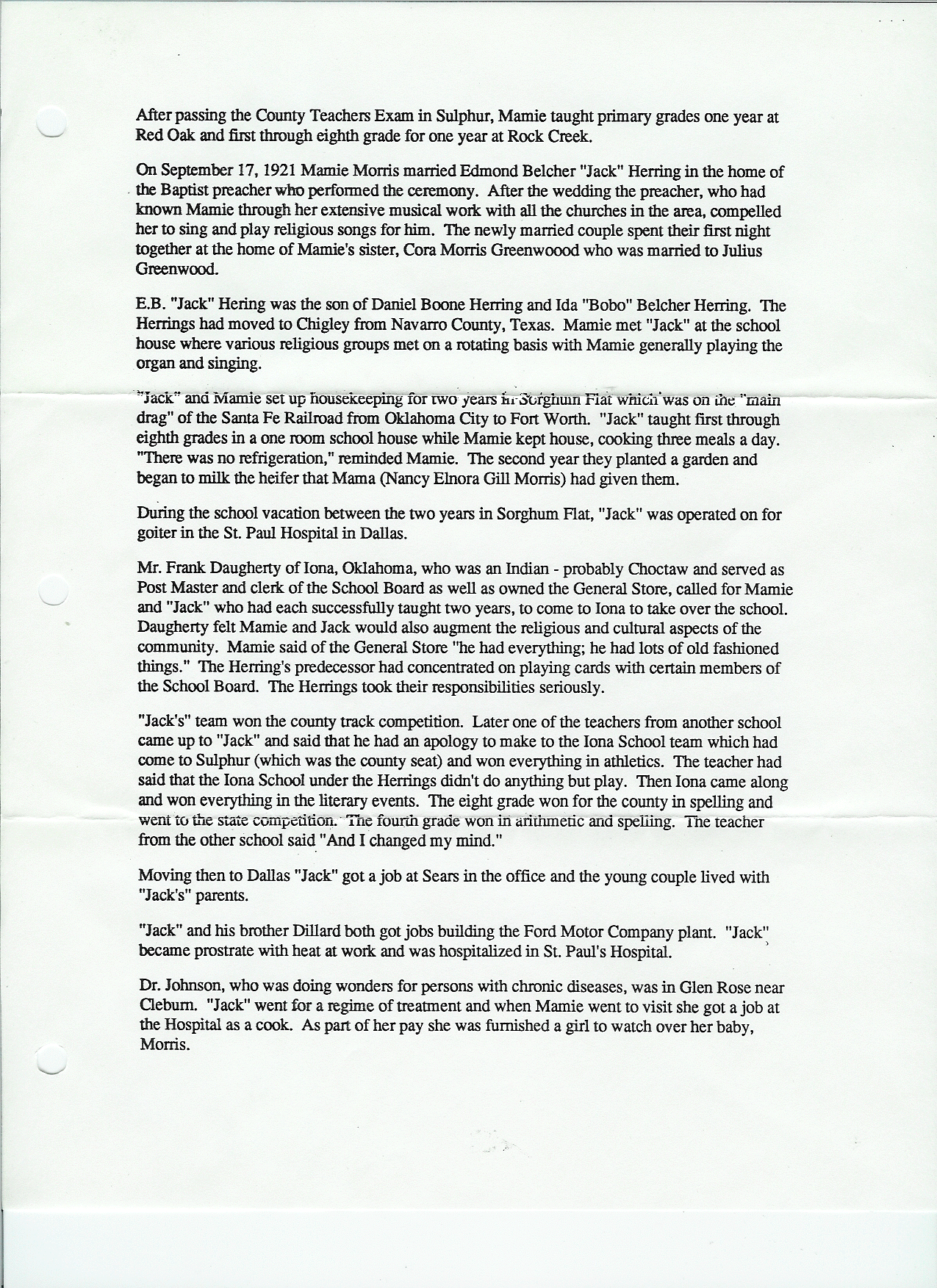
After passing the County Teachers Exam in Sulphur, Mamie taught primary grades one year at Red Oak and first through eighth grade for one year at Rock Creek.
On September 17, 1921 Mamie Morris married Edmond Belcher "Jack" Herring in the home of the Baptist preacher who performed the ceremony. After the wedding the preacher, who had known Mamie through her extensive musical work with all the churches in the area, compelled her to sing and play religious songs for him. The newly married couple spent their first night together at the home of Mamie's sister, Cora Morris Greenwood who was married to Julius Greenwood.
E.B. "Jack" Herring was the son of Daniel Boone Herring and Ida "Bobo" Belcher Herring. The Herrings had moved to Chigley from Navarro County, Texas. Mamie met "Jack" at the school house where various religious groups met on a rotating basis with Mamie generally playing the organ and singing.
"Jack" and Mamie set up housekeeping for two years in Sorghum Flat which was on the "main drag" of the Santa Fe Railroad from Oklahoma City to Fort Worth. "Jack" taught first through eighth grades in a one room school house while Mamie kept house, cooking three meals a day. "There was no refrigeration," reminded Mamie. The second year they planted a garden and began to milk the heifer that Mama (Nancy Elnora Gill Morris) had given them.
During the school vacation between the two years in Sorghum Flat, "Jack" was operated on for goiter in the St. Paul Hospital in Dallas.
Mr. Frank Daugherty of Iona, Oklahoma, who was an Indian — probably Choctaw — and served as Post Master and clerk of the School Board as well as owned the General Store, called for Mamie and "Jack" who had each successfully taught two years, to come to Iona to take over the school. Daugherty felt Mamie and Jack would also augment the religious and cultural aspects of the community. Mamie said of the General Store "he had everything; he had lots of old fashioned things." The Herring's predecessor had concentrated on playing cards with certain members of the School Board. The Herrings took their responsibilities seriously.
"Jack's" team won the county track competition. Later one of the teachers from another school came up to "Jack" and said that he had an apology to make to the Iona School team which had come to Sulphur (which was the county seat) and won everything in athletics. The teacher had said that the Iona School under the Herrings didn't do anything but play. Then Iona came along and won everything in the literary events. The eighth grade won for the county in spelling and went to the state competition. The fourth grade won in arithmetic and spelling. The teacher from the other school said "And I changed my mind."
Moving then to Dallas "Jack" got a job at Sears in the office and the young couple lived with "Jack's" parents.
"Jack" and his brother Dillard both got jobs building the Ford Motor Company plant. "Jack" became prostrate with heat at work and was hospitalized in St. Paul's Hospital.
Dr. Johnson, who was doing wonders for persons with chronic diseases, was in Glen Rose near Cleburn. "Jack" went for a regime of treatment and when Mamie went to visit she got a job at the Hospital as a cook. As part of her pay she was furnished a girl to watch over her baby, Morris.
Page 3 transcript:
Here’s the full transcription cleanly extracted from your image, formatted for easy use in your historical projects:
Extracted Text
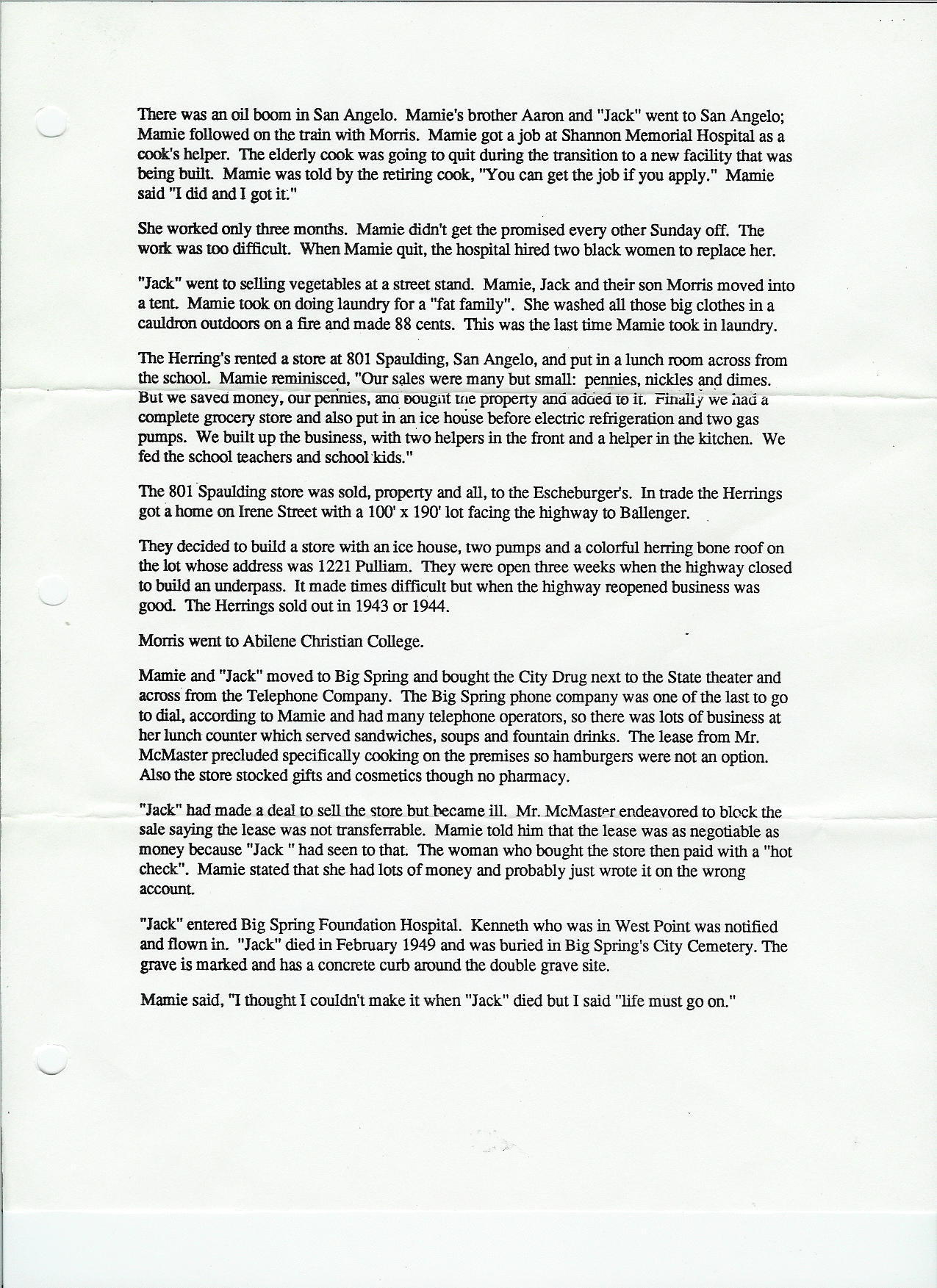
There was an oil boom in San Angelo. Mamie’s brother Aaron and “Jack” went to San Angelo; Mamie followed on the train with Morris. Mamie got a job at Shannon Memorial Hospital as a cook’s helper. The elderly cook was going to quit during the transition to a new facility that was being built. Mamie was told by the retiring cook, “You can get the job if you apply.” Mamie said “I did and I got it.”
She worked only three months. Mamie didn’t get the promised every other Sunday off. The work was too difficult. When Mamie quit, the hospital hired two black women to replace her.
“Jack” went to selling vegetables at a street stand. Mamie, Jack and their son Morris moved into a tent. Mamie took on doing laundry for a “fat family.” She washed all those big clothes in a cauldron outdoors on a fire and made 88 cents. This was the last time Mamie took in laundry.
The Herrings rented a store at 801 Spaulding, San Angelo, and put in a lunch room across from the school. Mamie reminisced, “Our sales were many but small: pennies, nickles and dimes. But we saved money, our pennies, and bought the property and added to it. Finally we had a complete grocery store and also put in an ice house before electric refrigeration and two gas pumps. We built up the business, with two helpers in the front and a helper in the kitchen. We fed the school teachers and school kids.”
The 801 Spaulding store was sold, property and all, to the Escheburger’s. In trade the Herrings got a home on Irene Street with a 100' x 190' lot facing the highway to Ballenger.
They decided to build a store with an ice house, two pumps and a colorful herring bone roof on the lot whose address was 1221 Pulliam. They were open three weeks when the highway closed to build an underpass. It made times difficult but when the highway reopened business was good. The Herrings sold out in 1943 or 1944.
Morris went to Abilene Christian College.
Mamie and “Jack” moved to Big Spring and bought the City Drug next to the State theater and across from the Telephone Company. The Big Spring phone company was one of the last to go to dial, according to Mamie and had many telephone operators, so there was lots of business at her lunch counter which served sandwiches, soups and fountain drinks. The lease from Mr. McMaster precluded specifically cooking on the premises so hamburgers were not an option. Also the store stocked gifts and cosmetics though no pharmacy.
“Jack” had made a deal to sell the store but became ill. Mr. McMaster endeavored to block the sale saying the lease was not transferrable. Mamie told him that the lease was as negotiable as money because “Jack” had seen to that. The woman who bought the store then paid with a “hot check.” Mamie stated that she had lots of money and probably just wrote it on the wrong account.
“Jack” entered Big Spring Foundation Hospital. Kenneth who was in West Point was notified and flown in. “Jack” died in February 1949 and was buried in Big Spring’s City Cemetery. The grave is marked and has a concrete curb around the double grave site.
Mamie said, “I thought I couldn’t make it when ‘Jack’ died but I said ‘life must go on.’”
MORRIS FAMILY BIBLE


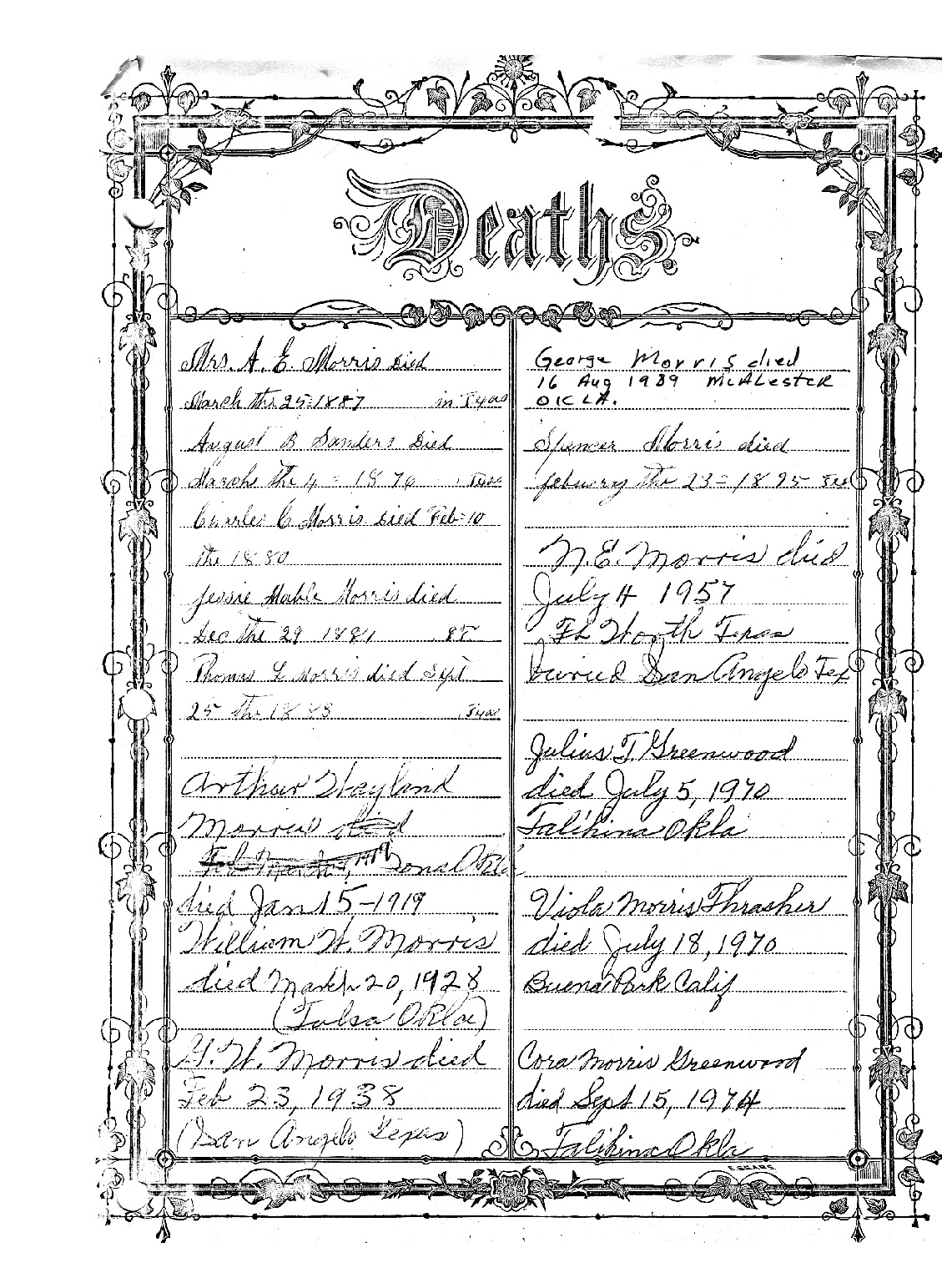
SUBMITTED BY: HARVEY MORRIS - JUNE 2007
© Dennis Muncrief for Murray County OKGenWeb June 2007